

The MA's take:
Phoebe Fraser, news editor:
I think culture is still the biggest obstacle. Policies can change quickly, but day to day behaviour, ingrained attitudes and who gets listened to in a room take longer to shift.
It is often quieter and more ingrained rather than obvious, which can make it harder to challenge.
Rebecca Weller, senior reporter:
I have been very lucky in my experience and have not experienced much gender inequality.
That said, the industry can still sometimes feel a bit like a ‘boys club’, particularly when it comes to working mums (interestingly I have never heard any of my male colleagues be referred to as a ‘working dad’).
Robyn Simmons, social media executive:
I think the biggest obstacle is still bias even when people don’t realise they have it. Assumptions about who looks like a leader, who should take time off for family or who is suited to certain roles, still affect decisions. Even when organisations genuinely want to be fair, many workplace systems were built around a traditional, full-time career path that assumed someone had fewer responsibilities at home.
Because of this, success seems to be measured by constant availability, less frequent time off or visibility in the office. This can disadvantage people who work flexibly or balance care alongside their job. As a result, we still see gender pay gaps, fewer women in senior leadership roles and women often reducing hours due to caring responsibilities.
Nikkie Thatcher, deputy editor:
Unconscious bias remains a big obstacle. It is often assumed women are less committed to their work due to family or caring needs (as this responsibility commonly falls to women - another point in itself), despite countless women proving this isn't the case.
Alice Bowyer, director of food & drink, Butcombe Group:
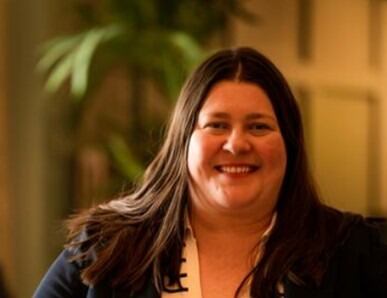
One of the biggest obstacles is still structural rather than individual — the persistence of unconscious bias and assumptions about leadership, senior roles and pay gaps, and career progression. In the most part, long and inflexible working patterns can disproportionately impact women, particularly around at home responsibilities. Until workplaces consistently challenge those norms and build inclusive pathways, progress can be uneven.
Cathy Olver, retail director, Star Pubs:

I don’t believe there is one single obstacle, I think there is an accumulation of different factors women face in society that we in Star Pubs / Heineken are actively working through to try to support women in their careers. We are living through a generational shift where women are still often seen as the primary caregivers, while some roles remain designed around constant availability or rigid working patterns. This can unintentionally disadvantage those balancing family life, particularly as many households now have two working parents. While dedication is vital in hospitality, commitment doesn’t always look the same for everyone.
There is also still a lack of female representation in the most senior roles in the industry, particularly in more revenue driving and cost control roles such as operations director and regional directors.
Female leadership continues to be defined in its own terms and it can look different from traditional male leadership styles. As this shift happens, the overall definition of effective leadership is evolving too, with inclusivity and empathy being recognised as commercial strengths, not soft skills.
This evolution benefits everyone with stronger teams, better cultures and ultimately, better business performance. At Star Pubs, our leadership team is now 50:50 male to female, and we’re already seeing the positive impact that balanced representation and diverse leadership styles can bring.
Jo O’Brien, publican at Hobs Meadow, Solihull:

As a woman, I believe the biggest obstacle to gender equality in hospitality is the hours - the need to work long hours while still putting pressure on yourself to be a mum, wife, house keeper and friend .
Even though I work extremely long hours, I still try to cook at least five days a week, keep up with all my housework and see family and friends. When I don’t do this, the guilt I feel is immense. So, personally for me, the biggest obstacle is gender inequality generally – what a woman is expected to do - the long work hours and the rest.
Vicky Colclough, managing director, Joule’s Brewery:

The biggest obstacle now is making sure the talent coming through reaches senior decision-making roles.
There are talented women throughout the sector but senior leadership still doesn’t always reflect that.
It’s rarely obvious barriers anymore. It’s more about confidence, perception and whether people can see a clear path ahead. When you don’t often see someone like you in a role, it can make it feel less attainable.
Karen Errington, operator of the Rat Inn, Anick, Northumberland:

The biggest obstacle is still a deeply ingrained gender bias.
There are preconceived stereotypes of what roles are suitable for women especially in leadership positions and in kitchens. In addition, the unsocial hours and work/life balance is a huge problem.
Which brings us onto the next bias; women are still generally viewed as the homemaker and main childcare providers.
Factoring a family into the equation can be impossible at times, this is why many women drift away from hospitality when they have families.
Providing flexible working in a kitchen environment is very difficult due to the unsocial and often long hours required to deliver the hospitality service so this results in many returning to work in part time roles which often limit progression and career advancement.
Ayesha Kalaji, chef-proprietor, Queen of Cups:
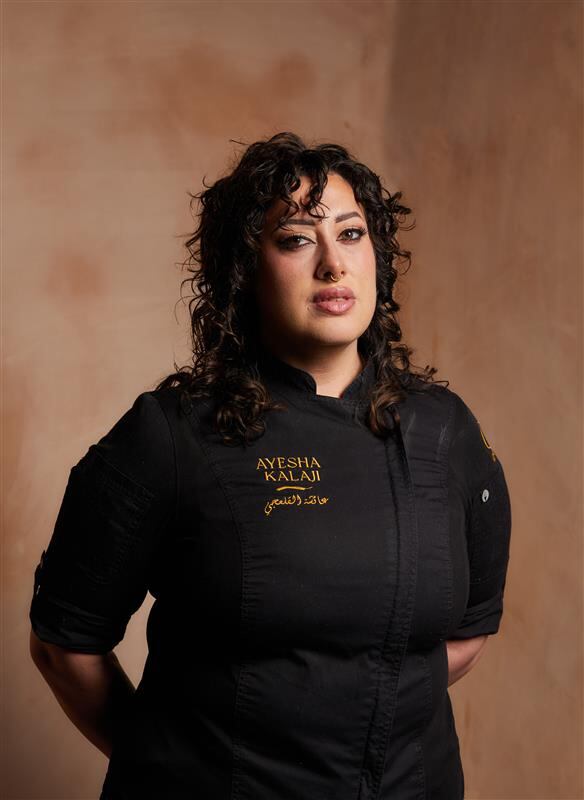
There are a multitude of factors that negatively impact gender equality within the kitchen.
They are cultural, societal and economic. One of the greatest is feeling as though we have to continuously prove we are just as good, or better, than our male counterparts to be taken seriously.
I was once told that I was only ever going to be a salad or pastry chef, reinforcing the idea that certain roles in the kitchen are attributed to certain genders and further contributes to the detrimental notion that some roles are lesser because they are deemed to be more feminine.
Female chefs can do everything male chefs can, but it still feels like a constant battle against the idea that women are cooks and men are chefs. These limitations are placed on female chefs due to social conditioning by patriarchal society and archaic industry archetypes that continue to reinforce these notions.
Molly Davis, head of communications, British Institute of Innkeeping:
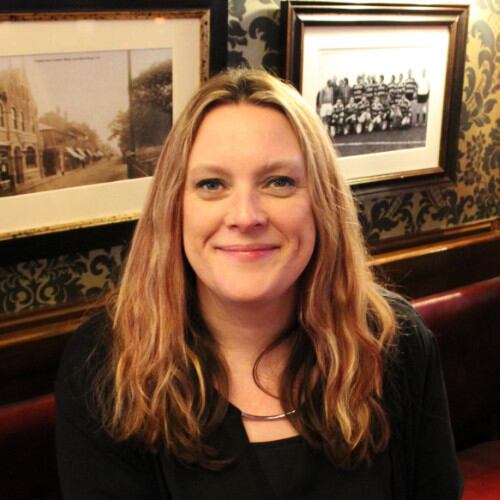
This is a tough one to answer, as I think it depends on so much about the individual circumstances, roles and companies we work for, but where I am in my life at the moment, it is (and always has been!) the things that affect you as a woman outside of the workplace that really have an impact. I have a brilliant husband and the 31 years we have been together has been enough time for us to learn how to work together as a team, but even though we both have full time jobs, I am the one who thinks about Christmas presents, who does the paperwork and admin for our lives etc.
The mental load often falls to me – while the practical things fall to him more often than not. I am lucky that the balance is right for us, but I know from friends and colleagues that even in great relationships, this is a rarity.
I think the best approach (and I would, wouldn’t I!) is communication. Yes I “think” about things more often, but accepting that I maybe don’t need to put as much pressure on myself to be all things, to all people, all of the time is vital – as is telling him how irritated I am that I had to manage our entire remortgage process last year while he got annoyed that he had to sign a form!
Emma McClarkin, BBPA CEO:

There really is no obstacle to entering hospitality and I would encourage everyone to consider a career in this industry. However, it can sometimes still be seen as a ‘boys’ club’ when it comes to real progression.
I think we cannot get away from the fact that we need more talented women represented at a senior level in the industry.
This perception can prevent women from either seeing themselves at the top, nor wanting to invest in a sector they might think isn’t invested in them.
We’ve got so many fabulous women but not at C-suite level, and that’s just bad for equality and bad for business. Programmes like Boardwalk are so important in mentoring women to get into C-suite roles.
Helen Sprason, managed pub area manager, St Austell:

Hospitality is a fantastic industry to work in, it’s fast‑paced, ever‑changing, and full of incredible people. However, one of the biggest and most persistent obstacles we face around gender equality is the perception of what work-life balance looks like in our sector.
There is still an assumption that senior roles, especially at C‑suite level, demand constant availability or a level of personal sacrifice that is incompatible with family life or wider commitments. Because women are more likely to carry caring responsibilities, this perception disproportionately impacts them long before they even consider applying for progression. It’s often the belief of what will be required, not the actual nature of the job that becomes the barrier.
Another significant obstacle sits within the perceptions of how women “should” lead. Traits such as passion, empathy, creativity, or emotional intelligence are often celebrated in male leaders but labelled very differently when demonstrated by women. A man may be described as decisive, passionate, or assertive, whereas a woman showing the same qualities may instead be viewed as emotional, overly driven, or difficult.
When these differences in interpretation go unacknowledged, or when teams are uncomfortable discussing them, they create subtle but powerful blockers to progression. Women can feel the pressure to temper or reshape their natural leadership style simply to fit expectations shaped by a more traditional, male‑dominated model of leadership.
Together, these perceptions, of work-life balance and of what “acceptable” leadership looks like, reinforce one another. They quietly influence who feels encouraged, who feels included, and ultimately who puts themselves forward for senior opportunities. And it’s these perceptions, far more than the reality of the work itself, that continue to slow progress toward true gender equality in our industry.
Jen Sloyan, CFO Valiant Pubs:

Having worked across different industries — but hospitality for the majority of my career — I’ve been able to see how workplace cultures compare. In my experience, hospitality is one of the most dynamic and opportunity-rich sectors. It rewards resilience, work ethic and the ability to thrive in a fast-paced environment — regardless of gender. I truly believe that for anyone, women included, if you work hard, build strong relationships and surround yourself with supportive mentors, there are fantastic opportunities available.
That said, we can’t ignore the broader picture. The statistics still show that women are underrepresented in senior leadership roles and that pay gaps persist. One of the most significant barriers remains the impact of caregiving responsibilities — particularly around having children. Hospitality is demanding, often with long and non-traditional hours, and that can create structural challenges that disproportionately affect women.
So, while individual experience can be positive, equality across the board requires systemic change — not just personal determination.
Dawn Browne, chief people officer, Fuller’s:

What is the biggest obstacle when it comes to gender equality in hospitality? I think the biggest problem is just the speed of change.
This process is undoing centuries where men were dominant, and that takes time. What this means is that if you look at the upper echelons of hospitality companies, they are still very male dominated – and you can see how, over time, more and more women have worked their way up. We need more women at board level – and the change is coming, but it takes time.
Linda Kennedy, director of investment and growth - property, Punch:

Wow where do I start, there are 3 fundamentals for me.
- Firstly, just the way society has designed the “world of work”, with expectations on women as main caregivers not just to children but also aging parents, alongside expectations of being primary breadwinners or major household contributors . The structure and working hours can constrain opportunity through a business and personal career development lens. It’s about creating choice, flexibility and opportunity, and less about compromise in my opinion.
- Secondly, bias whether it be unconscious or conscious around gender in what has predominately been male leadership roles. I’ve worked in construction and hospitality for over 25 years, where leadership roles have tended to be male dominated. I have actively removed myself from some teams where bias and culture are not inclusive and not interested in addressing change. Punch Pubs has been a breath of fresh air, working hard at encouraging great conversations to develop awareness across the business.
- Thirdly, the issue of self confidence of women and not really understanding or being able to articulate their value. Women are generally more likely to undersell their abilities than male colleagues – I have observed this so much over my career.
Karen de Koning, GM at Grove of Narberth:

I think the biggest obstacle to gender equality in hospitality is that there are still some outdated assumptions out there.
The industry has improved a lot, but some outdated expectations still influence how people are seen and supported. Another challenge is whether women feel confident and encouraged to put themselves forward.
If people don’t feel included or listened to, it naturally affects how far they feel they can go. The positive thing is that the hospitality profession is changing but breaking down some of those old stereotypes and creating environments where everyone feels valued is still key to us moving forward.
Kim Toft, co-owner of Daddy Marmalades:
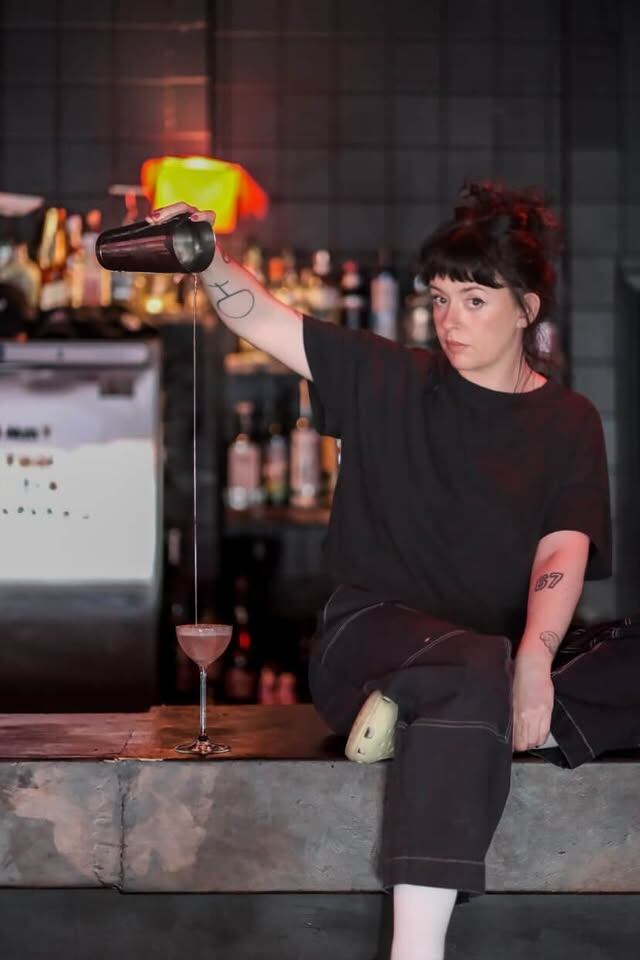
A big obstacle I find is that when we attend or host seminars surrounding issues faced by women, it’s often like preaching to the choir because the people who could really do with that kind of education do not see the value in attending.
So for me, the biggest obstacle is trying to get the right people to listen and try to change their perspectives.
Gemma Persechino, general manager of Dog and Pickle:

Women make up a huge portion of front-of-house and entry-level roles, but senior roles — executive chefs, head chefs, general managers, owners — are still disproportionately held by men.
Justine Lorriman, licensee of the Royal Dyche in Burnley, Lancashire:

Our sector can be very demanding. These can have the biggest effect on women, particularly those with caring responsibilities. It’s less about women coming into our industry but keeping them here and progressing them onto bigger roles.
Confidence is a big factor too, breaking into these male dominant industries can be quite daunting and having the belief that you belong here and can do this.
Nina Matsunaga, chef/operator at the Black Bull at Sedbergh:

I’m not sure what the biggest obstacle is, but one would be the industry’s image. It is still quite a largely male-dominated picture.
Katy Baldock, operator of the Bird in the Hand in Princes Risborough:

One of the biggest obstacles is the fact that women are expected to work like men, but we are physiologically different.
For example, we have monthly cycles that are not accounted for. There may be a day a month where we need a day off due to pain or fatigue - which are all a natural part of hormonal fluctuation.
Some women are happy to work through it but I believe that when we are menstruating, we should be resting or at least taking it easier.
Nicola Tickle, co-owner of Heft in Cumbria:

It’s a trickle-down effect, so we need to be seeing women in the rooms where decisions are being made as well as working amongst things.
Georgina Young, brewing director and head brewer, St Austell Brewery:
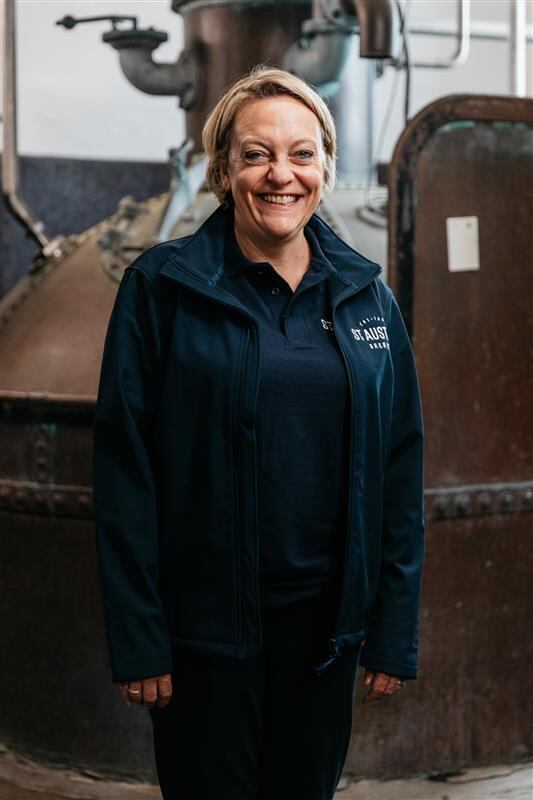
One of the biggest obstacles is simply awareness. A lot of people still don’t realise the breadth of opportunities in beer, not just brewing, but quality, engineering, hospitality, marketing and so much more. And beyond that, we need more women drinking beer in the first place.
When women feel confident exploring beer, they become more curious about how it’s made, and that’s often what sparks the passion to get involved professionally.
There are brilliant organisations helping break down those barriers – people like BeerBelle, Annabel Smith’s work championing inclusivity through training, Cask Marque initiatives, the WSET beer qualifications led by Sara Hobday and Natalya Watson, and the Women in Beer Awards which launched last year. They’re all helping to create visibility, education and real enthusiasm.
Emma Heal, managing director, Lucky Saint:

The system is broken when £98 in every £100 of investment goes to men. The gender pay gap remains and parental leave still does not create a level playing field.
Only 29% of women in the C-suite aspire to the CEO role, versus 49% of men. Many women are ambitious but top roles often look unsustainable. The pressure and exposure feel too high a personal price, so stepping back can feel like self-preservation, not a lack of drive. Fewer women at the top then means fewer visible role models.
Charley O’Toole, chief of staff, Chestnut Group:

The biggest obstacle to gender equality isn’t talent - especially in hospitality, where women make up much of the workforce - but access to career opportunities.
As roles become more senior, the number of women drops, not because they lack talent or capability, but because they often lack visibility and mentorship, and sometimes the confidence that comes from seeing people like them in senior positions.
At the same time, society continues to place a disproportionate share of caregiving and domestic responsibilities on women, creating real tension between leadership demands and home expectations. Add persistent biases around how ambition and leadership are perceived, and the result is a structural gap, not a talent gap - that slows women’s progress.