


The shift comes as research recently covered by the BBC found some beers can provide measurable levels of vitamin B6, an essential nutrient linked to brain, blood and immune function.
Join our new WhatsApp channel: The Morning Round-Up
Get the biggest pub trade stories straight to your phone. Listen to our one-minute daily news briefing and receive breaking news, exclusives and sector updates throughout the day. Remember to turn notifications on in the top right corner!
However, experts cautioned beer should not be seen as a key source of nutrients, with nutrition best coming from a balanced diet.
Against this backdrop, The Morning Advertiser (MA) has taken a look at some of the latest beer launches tapping into the growing functional drinks trend.
The category is increasingly borrowing from the language of functional soft drinks, with brands positioning themselves around the changing expectations of moderation-led and wellness conscious drinkers.
While some products are already available in the on trade and others are launching first through direct to consumer or retail channels, the direction of travel is clear: functional beer is moving beyond the supermarket shelf and into the wider drinking occasion.
BRULO’s high fibre alcohol free IPA

Scottish alcohol-free beer brand BRULO has launched All Good IPA, which it claims is the ‘world’s first’ beer to meet the official threshold for a high in fibre claim.
The 0.5% ABV vegan beer contains 5g of dietary fibre per 330ml can, equivalent to around 17% of an adult’s recommended daily intake. The brand said the fibre comes from a soluble fibre ingredient, with the beer developed over 12 months to ensure it remained stable through brewing, packaging and shelf life.
Founder and CEO James Brown said the launch followed demand from BRULO’s customer base for a “proper beer” with functional benefits, rather than sweeter or fruit led alcohol free styles.
“All Good IPA is a properly hoppy West Coast IPA that delivers more fibre than your breakfast,” he said. “It tastes like the beer you want to drink and works like the food your body actually needs.”
The beer is available through BRULO’s website, with retail availability to follow, and has an RRP of £2.62 per 330ml can.
Lucky Saint’s lime and sea salt lager with electrolytes

Lucky Saint has moved into more functional territory with the launch of Lime & Sea Salt Lager.
The alcohol-free lager is based on the brand’s original unfiltered lager, brewed with lime and mineral rich sea salt. Lucky Saint says the beer contains essential electrolytes including sodium, potassium and magnesium, as well as vitamin C, which the brand says are associated with hydration and performance.
The launch positions the brand closer to sports hydration and functional soft drinks, while retaining its beer-led proposition.
Lucky Saint describes the product as using natural ingredients and being left unfiltered for body and flavour. It is currently being sold in cans through the brand’s website.
Impossibrew targets relaxation

Impossibrew has built its proposition around enhanced alcohol-free beer, using what it calls its Social Blend.
The UK brand says its beers are brewed with a proprietary alcohol alternative blend using ingredients including L-Theanine, ashwagandha, plant extracts and vitamin B1.
L-Theanine, found naturally in green tea leaves, has been studied for its potential role on relaxation while maintaining alertness, while ashwagandha is an adaptogenic herb often associated with stress response, and vitamin B1 is linked to energy metabolism.
The brand positions the range as an alcohol-free alternative for drinkers looking for the ritual and social experience of beer, without drinking alcohol. Impossibrew describes its beers as designed to support relaxed social drinking, rather than intoxication.
Impossibrew is available through trade and wholesale channels, including alcohol free wholesale platforms.
Collider’s botanical and mushroom brew

Collider is another alcohol-free beer brand using functional ingredients to differentiate itself in the low & no category.
The brand says its beers are brewed with a proprietary blend of functional mushrooms and active botanicals, which it describes as delivering a “euphoric calm” without alcohol. It also positions the range as low calorie, starting from 36 calories per 330ml can.
The range includes lager and pale ale style products, sitting within a growing group of alcohol free brands looking to replicate not only the taste of beer, but also some of the social and mood led cues consumers associate with drinking.
Collider is available through wholesale alcohol free channels and is positioning itself across both consumer and trade occasions.
Prime Time low-calorie and and gluten-free beer

Prime Time is targeting the lighter beer occasion with a range positioned around lower calories, lower carbs and gluten free credentials.
The brand’s lager is 4.2% ABV and contains 95 calories and 4g of carbs per 330ml can. Prime Time says its beers contain 30% fewer calories and 63% fewer carbs compared with a range of premium beers, while also being certified gluten free and vegan.
The company’s range has also included a Session IPA at 95 calories, as well as a caffeine infused variant, showing how functional cues are expanding beyond alcohol free beer into full strength products.
Prime Time has also recently launched Pear Lager, a 4% ABV fruit beer made with British grown nashi pears. The beer contains 95 calories, 4g of carbs and 1.7g of sugar per 330ml can, which the brand says is 80% less sugar than other 4% ABV fruit beers.
Prime Time sells kegs, cans and bottles across the on trade, including pubs, bars and restaurants, as well as retail and DTC.
Thrive’s vitamin beer
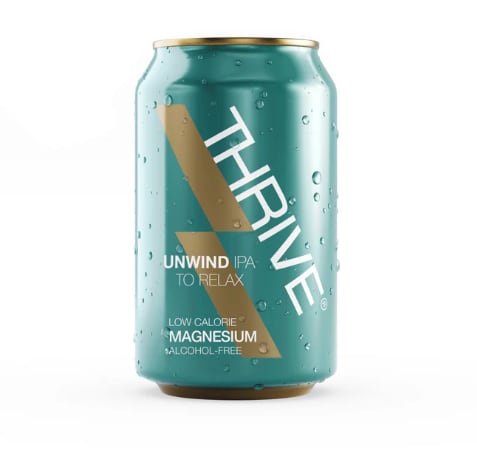
Belgian alcohol-free beer brand Thrive has taken a more direct vitamin-led approach.
Its Thrive Play product is described as an alcohol-free vitamin beer containing vitamins B and D, as well as vitamins A, C and E. The brand says the beer contains 50% of the recommended intake per can, with no added sugar, sweeteners, flavourings, preservatives or colourants.
The company has also developed Thrive Recovery IPA, an alcohol-free sports beer positioned around recovery and refreshment, with 10g of protein per serving.
The brand sits firmly within the performance and wellness end of the category, where beer is being positioned not just as a substitute for alcohol, but as an alternative to sports drinks and functional beverages.
Thrive offers B2B ordering and says it is stocked by sports clubs, retailers and venues across Europe.
Hello Lager adds magnesium and L theanine

Hello Lager is also positioning itself within the functional alcohol-free beer space, with a lager containing magnesium, vitamin C and L-theanine.
The brand describes the product as low calorie, low sugar, vegan, gluten free and made without artificial flavouring, with its range built around the idea of “feel good” beer.
The launch sits within a growing group of alcohol free beer brands looking to borrow cues from functional soft drinks, while retaining the flavour and format of lager.
Hello Lager is available through the brand’s website and has begun building an on trade presence.
Beyond beer
The functional drinks trend is also extending into beer adjacent categories, with brands using clean label credentials, food pairing and moderation cues to target similar consumer occasions.
BARHI targets food led drinking occasion

BARHI, described as the world’s first sparkling date based alcoholic beverage, launched commercially in January this year.
The 6% ABV drink is made from fresh Barhee dates and honey, and was developed as a food first alcoholic beverage designed to pair with spice rich cuisines.
The brand said it was created to fill a gap in the way alcoholic drinks complemented spicy food, and is built to enhance those flavours.
The drink is naturally gluten free, contains no added sugar and is positioned as an alternative to traditional beers, wines and ciders.
Founder Vikas Thakker said: “I always felt there was a gap in the way we looked at food and alcohol. Most alcoholic drinks are created first, and the pairing comes later. With BARHI, I wanted to reverse that idea.
“I started with the food, especially spice-rich cuisines, and built the drink around what would truly complement those flavours. That journey of finding the right balance led me to fresh dates and honey, creating BARHI, the world’s first sparkling date-based alcoholic beverage.”
Chance Clean Cider broadens clean label trend

The functional and clean label trend is also extending into cider, with Chance Clean Cider positioning itself around alcohol free, gluten free and vegan credentials.
The 0.5% ABV cider is made using British apples and is described by the brand as suitable for coeliacs.
It is positioned within the same moderation and inclusive drinking space as alcohol free beer, offering another route for operators looking to build better for you drinks ranges.
Chance has a clear on trade presence, with listings across pubs, bars and restaurant operators, including draught and packaged formats.
Category outlook
The rise of functional brews come as alcohol free continues to mature from a niche moderation category into a mainstream part of the drinks market.
But as more brands use wellness-led language, the need for clear, substantiated and compliant claims is becoming increasingly important.
For operators, the opportunity lies in offering products that meet changing consumer occasions without overstating their benefits.
Fibre, vitamins, electrolytes, low calories, and gluten- and alcohol-free formulations all offer different routes into the same wider trend, of drinkers increasingly wanting products that feel more purposeful, without giving up the social ritual of beer.
